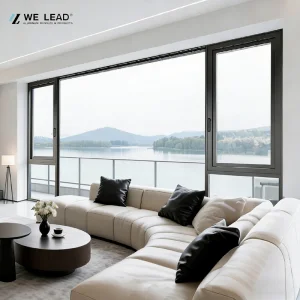
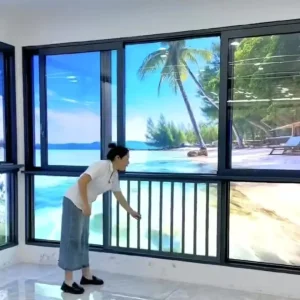
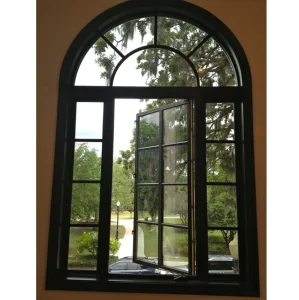
Engineered to pass rigorous EU thermal retention tests ($U_w \le 0.8 \text{ W/m}^2\text{K}$), these leading models represent the benchmark for modern Sarajevo residential and commercial developments.
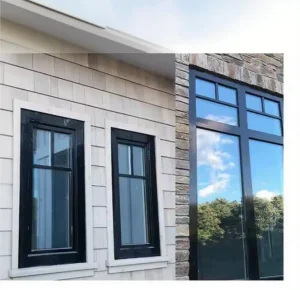
Sarajevo, nestled within the Miljacka River valley and surrounded by the formidable Dinaric Alps (including Mt. Trebević, Bjelašnica, and Jahorina), presents a highly specialized architectural microclimate. Characterized by a humid continental climate (Köppen: Dfb), the city experiences extreme temperature deltas: winter conditions frequently plunge to -15°C, accompanied by heavy snowfall and severe temperature inversions, while mid-summer temperatures regularly top +38°C with high ultraviolet flux.
Furthermore, Sarajevo's valley topography creates a distinct atmospheric condition known as winter temperature inversion, locking heavy particulate matter and urban smog inside the city basin. In response, local building regulations across Canton Sarajevo and Bosnia & Herzegovina (BiH) have rapidly converged toward strict European Union energy performance requirements (specifically aligned with the Energy Performance of Buildings Directive - EPBD). High-performance fenestration is no longer a decorative structural element; it is an active envelope barrier essential for thermal insulation, air quality isolation, and carbon footprint mitigation.
| Environmental Challenge | Physical Impact on Building | Engineering Mitigation via Thermal Break Windows |
|---|---|---|
| Alpine Winter Frost (-15°C) | Rapid heat loss, frost condensation on interior profiles, high heating costs. | Multi-cavity PA66 GF25 Polyamide strips + Argon-filled Low-E triple glazing. |
| Summer Solar Radiation (+38°C) | Overheating of glass facades, excessive AC load, UV degradation of seals. | Solar control Low-E coatings, warm-edge spacers, UV-resistant EPDM gaskets. |
| Valley Air Pollution & Smog | Ingress of particulate matters ($PM_{2.5}$ / $PM_{10}$), indoor air contamination. | Triple-seal continuous EPDM weather-stripping ensuring EN 12207 Class 4 Air Permeability. |
| Severe Mountain Wind Loads | Frame deflection, rainwater penetration in high-rise and slope structures. | High-tensile 6063-T5 aluminum alloy extrusion profiles rated EN 12210 Class C5. |
Understanding the thermodynamic structural insulation that separates modern high-tier aluminum profiles from traditional non-insulated frames.
The core of thermal break structural performance lies in the precision insertion of non-conductive polyamide isolators between the outer and inner aluminum profiles. Standard aluminum exhibits thermal conductivity of roughly $160 - 200 \text{ W/m}\cdot\text{K}$. In contrast, Technoform-grade PA66 GF25 (polyamide reinforced with 25% structural glass fiber) demonstrates a thermal conductivity coefficient of merely $0.3 \text{ W/m}\cdot\text{K}$—a 500-fold decrease in thermal transmission.
The structural insertion process involves precision mechanical knurling of the aluminum profile slots, mechanical insertion of the polyamide strip, and automated rolling deformation (crimping) to achieve superior shear strength resistant to structural wind pressures up to 5,000 Pa.
Profile insulation must be complemented by advanced glazing configurations. For optimal performance in Sarajevo's cold winter zones, Spencer window systems utilize multi-cavity IGU (Insulated Glass Units):
Villas and boutique hotels built along high-elevation alpine slopes endure extreme gust pressures, heavy snow loads, and rapid temperature swings.
Recommended Solution: Heavy-duty tilt-and-turn thermal break casement windows with triple-pane 8mm toughened glass, multipoint German hardware locking mechanisms (Roto/Siegenia), and reinforced structural mullions rated for wind speeds exceeding 160 km/h.
High-density urban cores demand sleek visual profiles, high light transmittance, superior sound attenuation to mask heavy urban traffic along Zmaja od Bosne, and dynamic micro-ventilation.
Recommended Solution: Concealed sash thermal break sliding systems and curtain wall integration with integrated hidden mosquito screens and sound insulation ratings up to $R_w = 45 \text{ dB}$.
Renovating classic Austrian-Hungarian or mid-century residential structures requires strict compliance with exterior visual aesthetics while upgrading internal thermal efficiency.
Recommended Solution: Powder-coated slim-frame thermal break profiles with micro-tilt opening functionality, replicating historical sightlines while dramatically cutting energy usage.
Nanjing Spencer Window Co., Ltd. was established in 2013 with a registered capital of RMB 20 million. The company operates a modern production base covering approximately 10,000 square meters. As an integrated enterprise combining research and development, manufacturing, and sales, Spencer specializes in aluminum alloy system doors and windows, offering solutions for both standard and high-end architectural applications.
With an annual production capacity of up to 100,000 square meters, the company’s products are widely used in residential buildings, commercial complexes, and industrial projects. By combining modern design concepts with durable materials and precise engineering, Spencer delivers door and window systems that feature excellent sealing performance, energy efficiency, and long-lasting reliability.
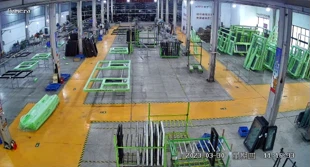
Spencer provides a comprehensive range of door and window solutions designed to meet diverse architectural needs. Its offerings include various types of casement windows, sliding systems, and integrated screen window designs, as well as insulated aluminum alloy doors and customized sunroom solutions. Through flexible configurations and tailored designs, the company is able to adapt its products to different spatial layouts, functional requirements, and aesthetic preferences, ensuring seamless integration into both exterior facades and interior spaces.
The company places strong emphasis on technological innovation and precision manufacturing. Equipped with advanced production lines and supported by an experienced technical team, Spencer maintains strict quality control throughout every stage of production. From raw material selection to processing and final assembly, each step is carefully managed to ensure high standards in durability, safety, thermal insulation, and soundproofing performance.
China’s aluminum extrusion ecosystem accounts for over 60% of global industrial capacity. Nanjing Spencer leverages integrated localized supply networks—from virgin aluminum alloy ingots (6063-T5/T6) to high-precision die extrusion, automated anodizing, and AkzoNobel fluorocarbon coating. This vertical integration yields a 25-35% cost efficiency advantage over local European assemblers without compromising structural metallurgy or finish durability.
Our factory incorporates multi-axis CNC machining centers delivering cutting tolerance within $\pm 0.1 \text{ mm}$. Automated corner-crimping machines injected with two-component structural corner adhesives ensure zero water penetration at frame joints—critical for resisting high-pressure Balkan wind-driven rains.
With established maritime and rail logistics, shipments are dispatched directly from Eastern Chinese ports to Port of Ploče (Croatia) or Port of Rijeka, connecting via direct highway corridors (Corridor Vc) directly into Sarajevo job sites, backed by protective sea-freight export packaging.
When specifying architectural system windows for medium-to-large developments in Bosnia & Herzegovina, procurement managers must audit key mechanical and physical parameters:
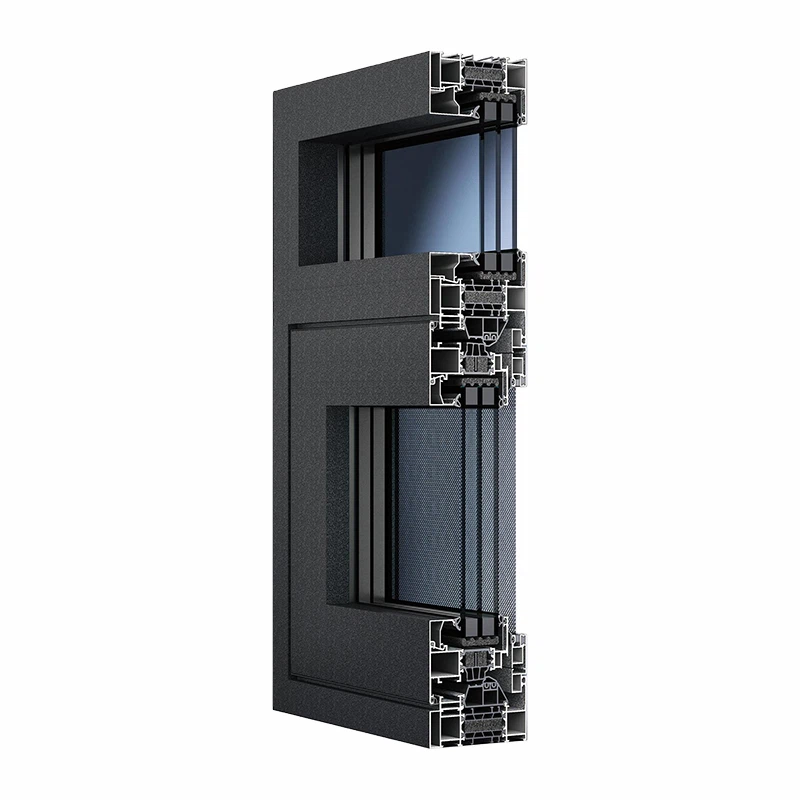
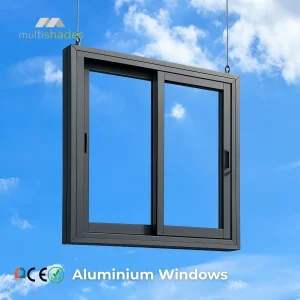
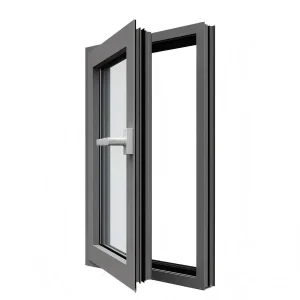
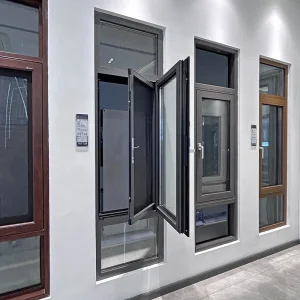
Figure 1: Spencer 100 Series Ultra-Quiet Inward-Opening System Window with PA66 Multi-Cavity Insulation.
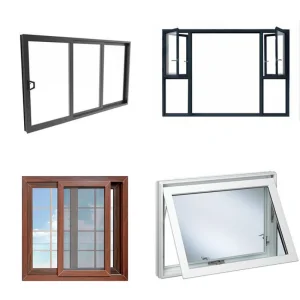
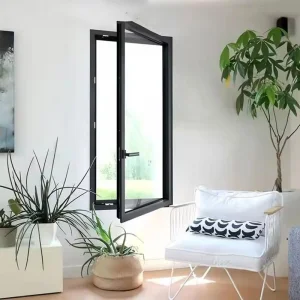
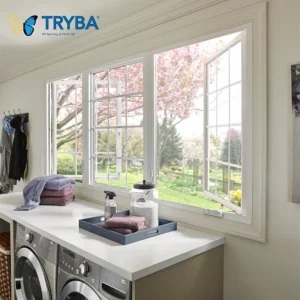
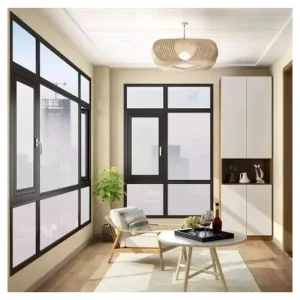
Explore our certified range of aluminum casement, tilt-and-turn, sliding, and passive house thermal break window assemblies.
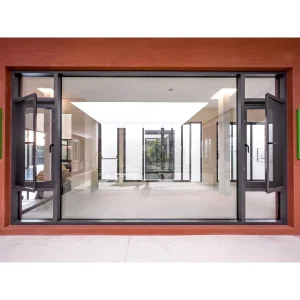
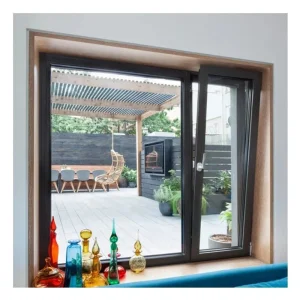
Future thermal break systems will incorporate concealed electric actuators tied to interior air quality monitors (PM2.5 sensing). In Sarajevo winters, automated trickle vents with electrostatic filters allow controlled air exchange while keeping smog out.
Architectural intent favors maximizing natural daylight. Advances in structural glass bonding allow profile sightlines to drop from 90mm down to 35mm while maintaining thermal break barrier depth.
Green building standards (LEED / BREEAM) require low embodied carbon. Using hydro-powered recycled aluminum billets reduces environmental footprint by 85%, creating sustainable lifecycle compliance for Balkan developers.
Addressing the top procurement, engineering, and importation questions for thermal break aluminum windows in the Sarajevo market.
Whether you are an architectural developer in Marijin Dvor, a contractor building mountain chalets in Bjelašnica, or a building material distributor in Bosnia & Herzegovina, Nanjing Spencer delivers certified thermal break window solutions engineered to perform.
 Spencer Window