Select architectural-grade window systems engineered for high thermal retention, sound proofing, and severe weather resistance.
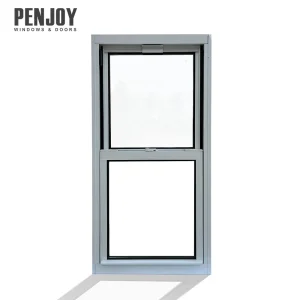
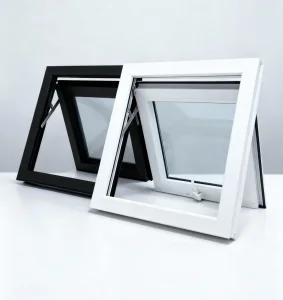
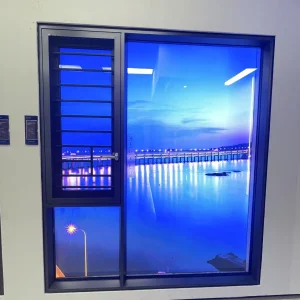
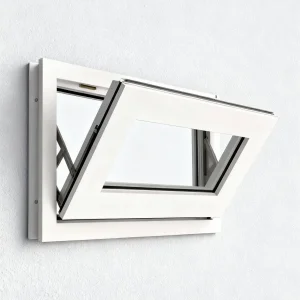
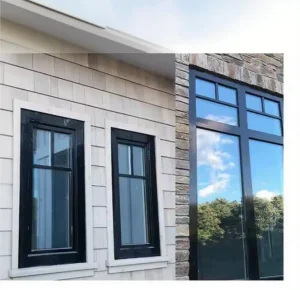
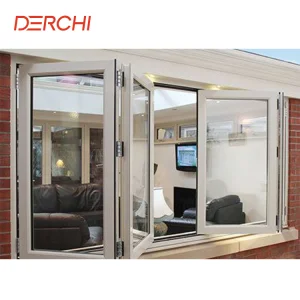
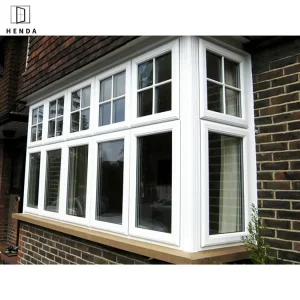
In the paradigm of modern green architecture, the building envelope plays a critical role in mitigating carbon emissions, managing thermal comfort, and safeguarding structural integrity against climate-driven environmental stresses. Among the specialized fenestration options, awning doors and windows represent a major development in high-performance construction. Distinguished by their top-hinged sash configuration that opens outward from the bottom, these units offer an optimal combination of natural ventilation control, rain protection, and superior structural sealing under extreme wind load conditions.
For international project developers, architectural consultants, and procurement managers, choosing a manufacturing partner requires looking beyond simple cost metrics. It demands a rigorous evaluation of engineering compliance, materials science, supply chain scalability, and international certifications. This technical white paper analyzes the capabilities of top-tier manufacturers and exporters—with a focus on Chinese supply chain integration, regional compliance standards, and the engineering details that differentiate high-performance units in the global market.
Established in 2013 with a registered capital of RMB 20 million, Nanjing Spencer Window Co., Ltd. has grown into a leading manufacturer of premium aluminum alloy system doors and windows. The company operates a modern production facility spanning approximately 10,000 square meters, integrating research and development, custom design engineering, and large-scale manufacturing to serve both domestic and international markets.
With an annual production capacity reaching 100,000 square meters, Nanjing Spencer Window Co., Ltd. supports major residential developments, high-rise office towers, and custom commercial projects worldwide. Their structural engineering approach combines high-grade alloys, premium hardware systems, and advanced thermal insulation technology. This ensures all finished window assemblies meet strict international standards for sealing performance, energy conservation, wind load resistance, and structural durability.
"Quality First, Customer Foremost, Integrity-Based." This guiding philosophy drives the Spencer team across all phases of operation—from initial raw material testing to custom design layout, automated profiling, multi-point lock integration, and comprehensive post-production inspections.
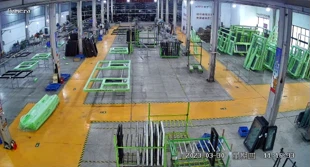
Figure 1: Nanjing Spencer Window Co., Ltd. Manufacturing Facility Overview
The company’s product line includes thermal break casement windows, sliding door systems, integrated insect screen sashes, double-hung windows, and custom sunroom structures. By utilizing modular architectural systems and flexible profiling options, Nanjing Spencer Window Co., Ltd. designs products that fit seamlessly into diverse building envelopes, satisfying both strict regulatory requirements and modern architectural styles.
China remains the world's leading hub for fenestration manufacturing, thanks to integrated supply networks, advanced material processing, and deep engineering expertise. Leading manufacturers like Nanjing Spencer Window Co., Ltd. leverage these regional advantages to offer high-performance products at competitive prices.
China's direct access to high-purity aluminum smelting and precision alloy formulation guarantees the use of structural-grade 6063-T5 or 6063-T6 aluminum extrusions. These alloys offer superior tensile strength, excellent resistance to environmental oxidation, and the structural integrity required to support massive glazing loads without bending or warping.
The close proximity of extrusion mills, powder-coating lines, glass processors, and specialized hardware manufacturers simplifies the entire production cycle. This vertical integration reduces logistics overhead, minimizes material handling damage, and cuts lead times for large-scale custom orders by up to 40% compared to fragmented western supply chains.
Chinese production lines use automated CNC machining centers, robotic corner welding, and laser-guided milling. This high level of automation ensures dimensional accuracy within ±0.5mm across production runs of 100,000 square meters, delivering consistent quality that protects against air infiltration and water leaks.
The performance of an awning window or door is determined by the design of its thermal barrier, structural sealing gaskets, and mechanical hardware. To help procurement engineers specify the correct systems, the table below highlights the standard materials and engineering specifications of high-performance awning units.
| Performance Parameter | Standard Specification (Entry Level) | High-Performance Specification (Commercial Grade) | Engineering Benefit & Impact |
|---|---|---|---|
| Alloy Construction | Non-Thermal Break 6063-T5 | Multi-Chamber Thermal Break 6063-T6 (PA66-GF25) | Prevents thermal bridging, significantly reducing structural condensation and HVAC energy consumption. |
| Glazing Profile | Double-Pane Clear Tempered (5mm + 9A + 5mm) | Triple-Pane Low-E Argon-Filled (6mm + 12Ar + 6mm + 12Ar + 6mm) | Improves overall thermal efficiency, lowering U-values to < 0.8 W/m²K and enhancing soundproofing (STC 45). |
| Locking Mechanism | Single-Point Handle Latch | Multi-Point Perimeter Compression Lock (Heavy Duty) | Ensures uniform gasket pressure, prevents forced entry, and blocks high-velocity rain and wind. |
| Gasket Material | Standard PVC Gaskets | Co-extruded EPDM / TPE Triple Weather Stripping | Maintains elasticity under extreme temperatures (-40°C to +80°C) to prevent air infiltration. |
| Hardware / Hinge | Standard Friction Stays | Heavy-Duty Stainless Steel 304 Friction Stays & Limiter | Supports heavy glass weights (up to 120kg) and keeps sashes stable in high winds. |
High-performance awning windows use PA66-GF25 polyamide thermal barriers (reinforced with 25% glass fiber). These barriers match the thermal expansion coefficient of aluminum, preventing mechanical stress cracks and seal failure under extreme seasonal temperature swings.
Procuring building envelope materials from international manufacturers requires strict quality assurance and structured logistics. To ensure quality matches design specifications, enterprise buyers should follow a structured inspection process.
Verify raw materials, inspect alloy certificates, check structural wall thicknesses, and test the moisture content of timber elements (for alu-clad systems) prior to extrusion.
Ensure computerized routing of hardware recesses matches specification sheets within 0.2mm to guarantee smooth installation and long-term operation of multi-point locks.
Conduct random ASTM air permeability, water penetration, and uniform structural load testing in the factory's QA laboratory to verify real-world performance.
Use protective corner wraps, heavy-duty shrink film, and heat-treated wooden crates to protect double-glazed and triple-glazed units during ocean transit.
Building codes govern the performance standards of fenestration systems. Exporters like Nanjing Spencer Window Co., Ltd. configure their products to meet the legal requirements of target export markets:
For projects in the United States and Canada, window assemblies must comply with the AAMA/WDMA/CSA 101/I.S.2/A440 standard. Energy performance must be certified by the National Fenestration Rating Council (NFRC), which measures U-factors, Solar Heat Gain Coefficients (SHGC), and Visible Transmittance (VT). Awning windows destined for cold climates require Low-E glass coatings to reflect radiant heat back inside, ensuring compliance with Energy Star guidelines.
Products exported to the EU must carry the CE Mark and comply with product standard EN 14351-1. This regulation evaluates acoustic performance, water tightness, air permeability, and load-bearing capacity of safety devices. With Europe's focus on decarbonization and Passive House design, manufacturers must supply window systems with U-values below 0.8 W/m²K, which typically requires triple-pane configurations, warm-edge spacers, and insulated frames.
The versatile awning configuration performs well across diverse regional climates and architectural styles. Selecting the correct glass coatings, profile systems, and hardware configurations depends on these localized environmental conditions:
Coastal areas require window systems with high Design Pressure (DP) ratings. Awning windows, which close tightly against the frame when wind blows against them, offer excellent water and wind resistance. For these locations, specify laminated impact glass, heavy-duty stainless steel hinges, and corrosion-resistant hardware coatings.
Awning windows are ideal for tropical regions because their bottom-opening sash acts as a protective canopy. This allows for continuous natural ventilation during rainstorms while keeping interior spaces dry, reducing reliance on mechanical air conditioning.
For high-rise residential and commercial buildings, acoustic control is essential. Combining multi-chamber PVC or thermal break aluminum profiles with thick, double-glazed laminated glass creates an effective acoustic barrier, dampening low-frequency street and traffic noise.
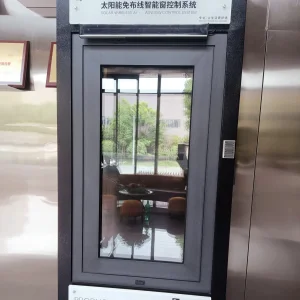
The global window and door market is shifting toward smart, energy-efficient building envelopes. A major innovation is the development of digital smart building materials, such as solar-powered wireless automatic skylights and motorized casement sashes. These systems integrate with home automation and Building Management Systems (BMS) to automatically adjust ventilation based on internal CO2 levels, temperature, and exterior weather conditions.
Additionally, manufacturers are adopting circular economy principles. This includes using recycled aluminum, which requires only 5% of the energy needed for primary aluminum production, and moving toward eco-friendly powder coatings free of Volatile Organic Compounds (VOCs). These practices help developers achieve international green building certifications like LEED and BREEAM.
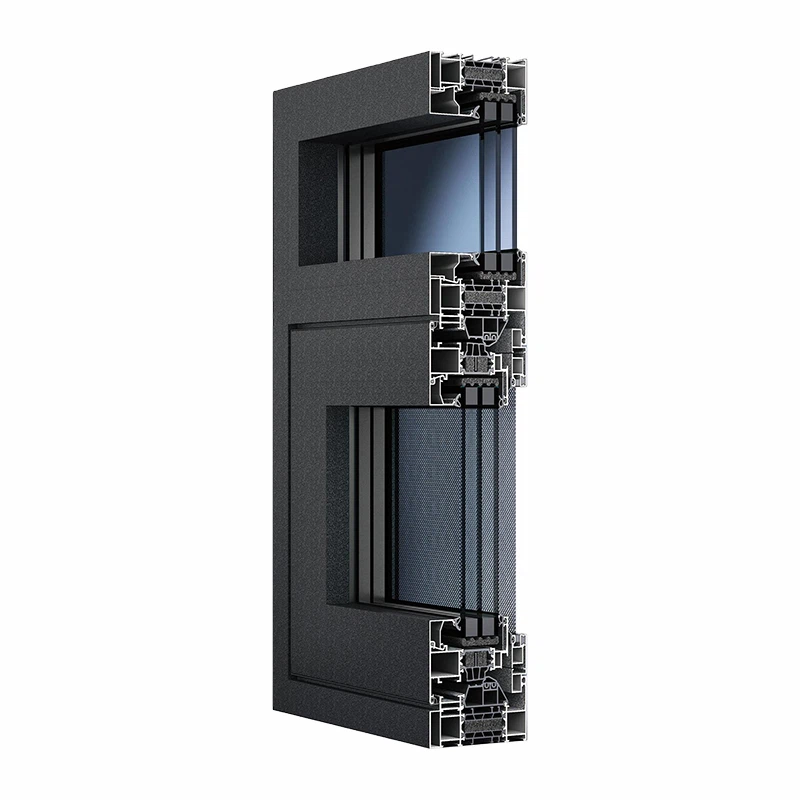
Figure 2: 100 Series Ultra-Quiet Integrated System Window
Technical answers to common engineering, purchasing, and design questions regarding awning window systems.
The main difference is the hinge location and the direction of the opening. An awning window is hinged at the top and swings outward from the bottom, offering rain protection while open. A hopper window is hinged at the bottom and swings inward from the top, commonly used in basements or high-wall applications to maximize upward airflow.
Aluminum is a highly conductive metal, meaning heat easily passes through it. A thermal break places a non-conductive barrier, such as a polyamide strip (PA66-GF25), between the interior and exterior aluminum profiles. This isolates the indoor environment, lowers thermal conductivity, reduces energy costs, and stops indoor condensation.
Standard lead times range from 30 to 45 days. This includes drawing approval (5–7 days), extrusion and surface coating (15–20 days), glass fabrication and assembly (10–15 days), and final factory testing before packaging.
Double-glazed and triple-glazed units are sealed using a dual-seal method: a primary PIB (polyisobutylene) moisture seal and a secondary structural seal (silicone or polyurethane). Incorporating molecular sieve desiccant inside the spacer bar absorbs any trapped moisture, preventing condensation inside the unit.
US imports must meet local building codes, which typically require AAMA certification for air, water, and structural performance, NFRC certification for thermal values (U-factor and SHGC), and SGCC (Safety Glazing Certification Council) certification for all tempered and safety glass.
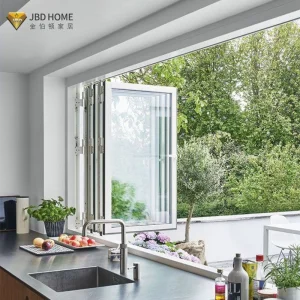
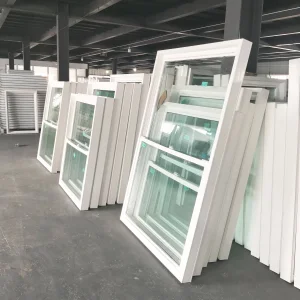
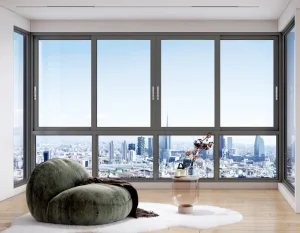
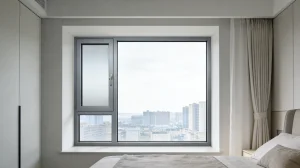
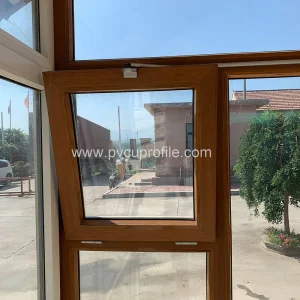
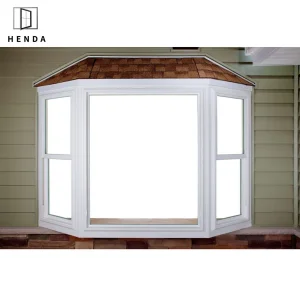
Explore additional high-performance window designs, including folding, sliding, and specialized architectural solutions.

 Spencer Window