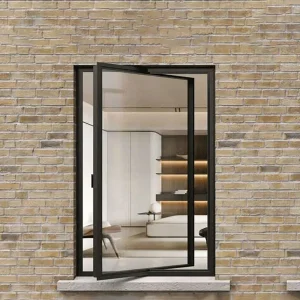
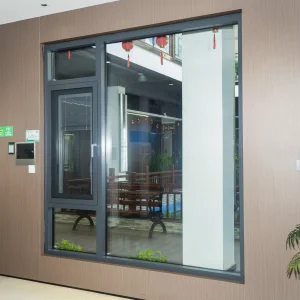
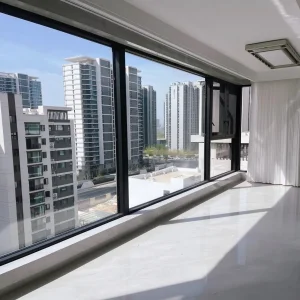
Explore our premium architectural grade window assemblies featuring high-performance thermal breaks, acoustic insulation, and low-E glass options.
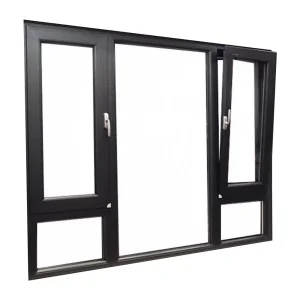
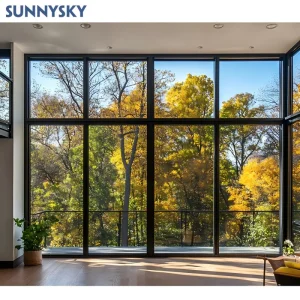
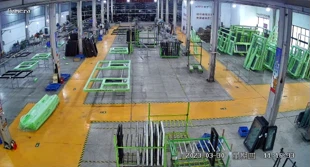
Established in 2013 with a robust registered capital of RMB 20 million, Nanjing Spencer Window Co., Ltd. has established itself as an authoritative leader in the sustainable window manufacturing sector. Operating from a state-of-the-art production base spanning approximately 10,000 square meters, we integrate research and development, manufacturing, and global sales to pioneer thermal efficiency and green structural solutions.
Our facility operates under rigorous ISO quality systems, maintaining an annual production capacity of 100,000 square meters. Our advanced profiles are optimized for residential developments, commercial complexes, and industrial systems. By combining cutting-edge structural engineering with recycled aluminum alloys, we offer superior acoustic control, high-strength structural profiles, and unmatched thermal break sealing performance designed to exceed modern net-zero carbon building requirements.
Analyzing how sustainable window design minimizes structural thermal transfer to satisfy LEED, BREEAM, and DGNB criteria worldwide.
In modern architectural design, the window profile and glazing assembly represent the most critical interface for carbon reduction and climate envelope control. Fenestration accounts for up to 30% to 40% of building thermal gain and loss. As regulatory bodies enforce strict thermal performance ratings globally (such as the EU Energy Performance of Buildings Directive and US Title 24 guidelines), selecting window materials with low embodied carbon and high thermal resistance has shifted from a decorative choice to a legal necessity.
Nanjing Spencer Window Co., Ltd. addresses this demand by fabricating windows that combine high structural load capacity with minimal heat transfer coefficient (U-value). By utilizing virgin and post-consumer recycled aluminum, high-grade polyamide thermal barrier strips (PA66 GF25), and advanced low-emissivity (low-E) gas-filled glass units, we supply global developers with certified fenestration systems capable of reducing mechanical HVAC loads and cutting structural operating carbon emissions by up to 25% over the building’s lifecycle.
Our multi-generational approach to developing high-performance, eco-friendly window frames and smart glass integration.
Integration of high-grade 6063-T5 aluminum alloys containing up to 60% post-industrial recycled content, lowering the carbon footprint of structural frames at the billet level.
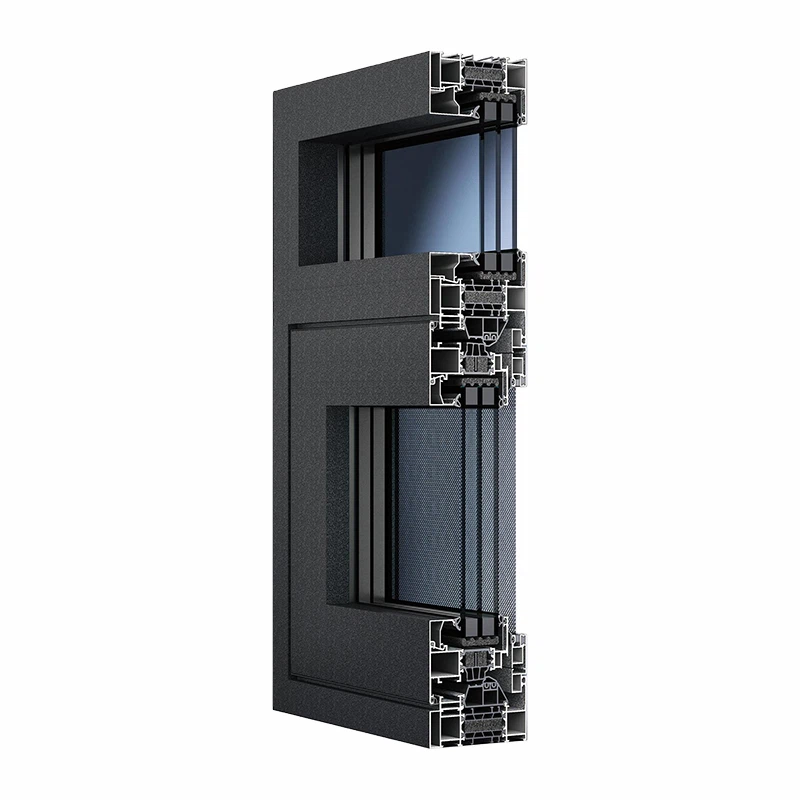
Transitioning to multi-cavity glass fiber reinforced polyamide thermal barriers. This process separates the exterior and interior aluminum faces to minimize energy migration and dew-point condensation risks.
Standardizing warm-edge spacer technology paired with triple-paned insulated glass units (IGUs) filled with 90%+ Argon gas to optimize Solar Heat Gain Coefficients (SHGC) for cold climates.
Ongoing R&D into Building Integrated Photovoltaics (BIPV) and smart self-shading electrochromic glass systems to generate clean energy directly from structural facades.
Why sourcing sustainable window materials from our Nanjing Spencer factory delivers structural reliability, scalability, and financial optimization.
We source raw billets directly from domestic aluminum smelting hubs, insulating Spencer from global supply disruptions and stabilizing costs for high-volume commercial contracts.
Equipped with advanced European-profile double-head precision cutting saws and automated multi-axis CNC milling centers, we guarantee tolerances within 0.1mm for perfect water-tightness and structural stability.
Situated within the Yangtze River Delta logistics cluster near Nanjing and Shanghai ports, Spencer provides fast shipping routes to global markets, lowering transshipment carbon costs.
Engineered to adapt to challenging microclimates, high wind loads, and thermal zones across global territories.
1. Coastal & Hurricane Zones (North America & Caribbean): In regions susceptible to extreme storm events, Spencer’s windows utilize heavy-duty tempered safety glass bonded with robust PVB (Polyvinyl Butyral) interlayers. Our window frames are designed to withstand high DP (Design Pressure) values, preventing water intrusion and structural failure during wind-driven rainstorms.
2. Extreme Cold Zones (Northern Europe & Canada): In continental or sub-arctic environments, controlling thermal transmittance is vital. Our customized triple-glazing systems integrate multi-layer spectrally selective Low-E coatings with warm edge spacer profiles, keeping the interior frame surface temperatures warm to eliminate thermal bridging and moisture condensation.
3. High-Temperature & UV Tropical Zones (Southeast Asia & Middle East): Under intense solar radiation, standard PVC and low-quality finishes degrade. Spencer windows feature fluorocarbon (PVDF) and architectural powder-coated finishes that resist UV degradation, chalking, and salt spray corrosion, retaining structural integrity and aesthetics for decades.
A breakdown of Spencer's material metrics compared to industry standards.
| Performance Indicator | Spencer Standard Profiles | Spencer Ultra-Thermal Break | Global Standard Targets |
|---|---|---|---|
| U-Frame (Thermal Transmittance) | 1.6 W/m²·K | 1.1 W/m²·K | < 1.8 W/m²·K (EU Standard) |
| Acoustic Performance (STC/OITC) | 38 dB Sound Reduction | 48 dB Sound Reduction | 35 dB (Urban Residential Standard) |
| Water Penetration Resistance | Class 8 (GB/T 7106) | Class 9 (Highest Protection) | AAMA Class 50 (Commercial Limit) |
| Wind Load Resistance | 4.5 kPa (Class 7) | 5.5 kPa (Class 9) | ASTM E330 Compliant |
| Profile Recyclability | 100% Fully Recyclable | 100% Cradle-to-Cradle Ready | Varies by Material Category |
Technical, supply chain, and compliance answers from our senior engineering team.
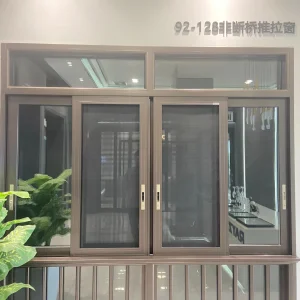
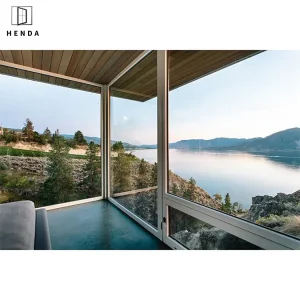
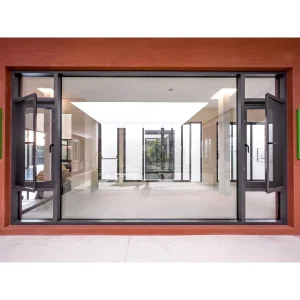
Architectural and commercial fenestration systems built for extreme durability, weatherproofing, and modern aesthetics.
 Spencer Window