Choosing the right window and door frame affects comfort, energy use, and long-term building performance. This is why buyers often ask, “Why should I choose thermal break aluminum over standard metal?” The answer begins with heat flow. Standard aluminum conducts outdoor heat quickly through the frame. Thermal break aluminum interrupts that path with an insulating polyamide barrier. The result is a warmer interior frame during winter and a cooler surface during summer.
Dr. Joseph Lstiburek, a respected building-science expert, explains, “The perfect wall is one that keeps the rain out, keeps the heat in, and keeps the vapor out.” His principle applies directly to high-performance aluminum systems. A properly designed thermal break frame can reduce condensation risks around glass edges and improve indoor comfort near windows. In a cold climate, the frame feels less icy. In a hot climate, air conditioning works less aggressively. Small details matter.
China’s leading thermal break aluminum manufacturers also offer durable finishes, precise profiles, and flexible system designs. These features support residential towers, offices, villas, and coastal projects. However, thermal performance depends on more than the frame alone. Glass selection, installation quality, drainage, seals, and local climate all influence results. That is where a careful supplier matters.
Thermal break aluminum is not automatically perfect. Poor assembly can weaken its advantages. Overselling efficiency is another common mistake. Buyers should request test data, verified U-values, air-tightness results, and project references. The smarter choice combines material science with honest evaluation. For many modern buildings, thermal break aluminum offers a practical balance between strength, appearance, durability, and energy performance.
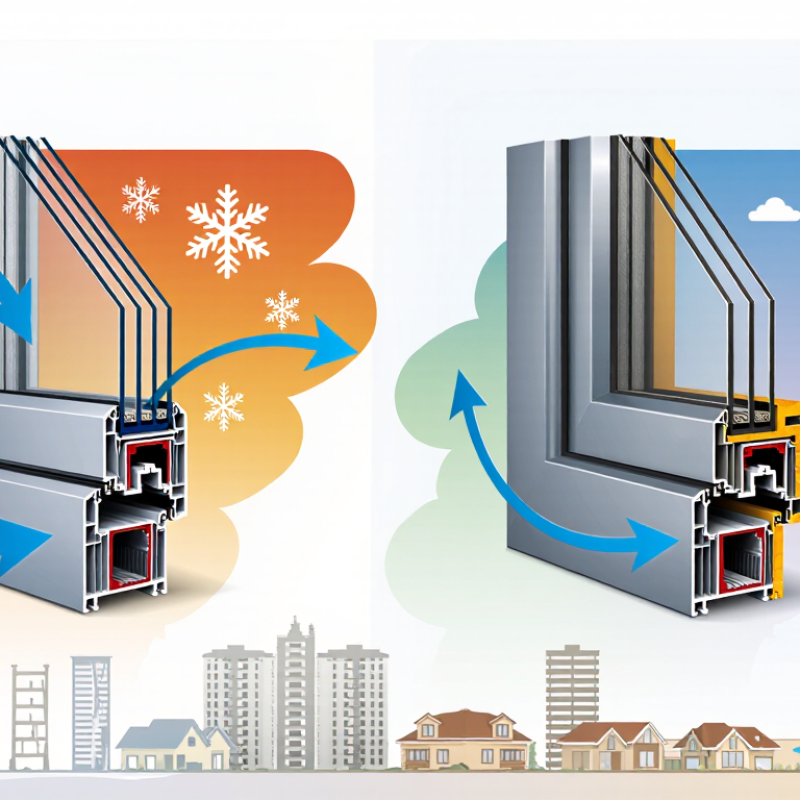
Thermal break aluminum uses a low-conductivity polyamide strip between two aluminum profiles. This strip interrupts the metal path, slowing heat transfer from the warm side to the cold side. Aluminum conducts heat at roughly 205 W/m·K, while polyamide is near 0.25 W/m·K. The difference is substantial. The frame becomes less like a metal bridge.
The International Energy Agency reports that buildings use about 30% of global final energy and create around 26% of energy-related emissions. The U.S. Department of Energy also estimates that windows can represent 25–30% of residential heating and cooling energy use. A thermally improved frame can reduce edge temperatures, condensation risk, and indoor drafts. Comfort improves near the glass.
Details still matter. Strip width, corner joints, gaskets, glass selection, and installation decide the final U-factor. Standards such as EN ISO 10077 and NFRC procedures help compare tested performance. Thermal break aluminum is not magic. Poor assembly can waste its advantage. In humid coastal projects, I would inspect drainage and seals carefully. In real buildings, workmanship sometimes matters more than the brochure.
China’s Top 10 Thermal Break Aluminum Manufacturers and Product Strengths
China’s leading thermal break aluminum manufacturers compete through profile design, testing, and production control. Their systems commonly use polyamide strips between interior and exterior aluminum sections. This reduces direct heat transfer. It also limits condensation around window frames.
The International Energy Agency reported in its 2023 Energy Efficiency report that buildings consume about 30% of global final energy. They also create roughly 26% of energy-related emissions. Thermal break systems can support lower heating and cooling demand, but performance depends on installation quality. A wide profile alone proves little. Buyers should request U-values, air-tightness results, water-tightness data, and thermal test reports.
The strongest Chinese suppliers usually offer multiple cavity profiles, low-E glazing options, CNC machining, and project-based customization. Some provide recycled aluminum content and controlled alloy testing. Others perform better in large-scale extrusion or export packaging. A credible top-ten comparison should review certifications, batch traceability, mold accuracy, and after-sales response. The World Green Building Council identifies building materials and operational efficiency as major carbon considerations. Yet product claims can sound polished. They still need independent verification. No manufacturer wins every category. A cheaper frame may later demand more adjustment, sealing, or site labor. That practical cost is easy to miss.
Thermal break aluminum separates the exterior and interior frame with a low-conductivity polyamide barrier. Conventional aluminum frames create a continuous metal path, transferring outdoor heat directly indoors. The difference feels obvious near a sunny window. A thermal break can reduce condensation risk and improve indoor comfort, but it does not make every window efficient.
The U.S. Department of Energy reports that windows can cause 25%–30% of residential heating and cooling energy use. The International Energy Agency and UNEP also reported that buildings and construction consumed about 34% of global energy in 2022. These figures explain the interest in better frames. Still, frame performance depends on glazing, seals, spacer design, orientation, and installation quality. A strong thermal break cannot repair a poor installation. That is an uncomfortable detail.
Tips: Request the complete window U-factor, not only the frame value. Check independent laboratory results and local climate requirements. Inspect corner joints and drainage paths before approval. Ask whether the installer has measured air leakage on completed projects.
Thermal break aluminum also retains aluminum’s practical strengths: low weight, corrosion resistance, dimensional stability, and narrow sightlines. Conventional metal frames may cost less initially, especially in mild climates. Yet their colder interior surfaces can increase discomfort beside the frame. The wiser choice depends on the whole window system, not the material label alone.
Thermal break aluminum uses an insulating separator between the inner and outer metal profiles. This reduces heat transfer through window and door frames. In practice, rooms feel more stable near large glass openings. Heating and cooling systems may also operate less often.
The material supports better energy performance without giving up aluminum’s slim appearance. It resists corrosion, handles daily use, and needs limited maintenance. Its strong frame allows larger openings, which can bring more daylight indoors. The thermal barrier also helps reduce interior condensation during cold weather. However, it is not a magic fix. Poor glass selection, weak seals, or careless installation can reduce the expected benefit. Project teams should review U-values, drainage paths, and local energy requirements before ordering.
Tips: Specify tested frame-and-glass systems, not frames alone. Check corner joints carefully. Small gaps matter. Use qualified installers and inspect the thermal barrier before assembly.
A mock-up can reveal air leakage, difficult hardware movement, or water-management problems early. Cost is another practical concern. Thermal break aluminum often costs more initially, but lower energy use and longer service life may improve overall value. The calculation should include climate, building use, maintenance, and replacement risks. Not every project needs the same specification.
Choosing a Chinese thermal break aluminum supplier requires more than comparing quotations. The profile may look polished, yet its insulation performance depends on alloy quality, polyamide strip design, assembly pressure, and machining accuracy. Ask for test reports showing U-value, air tightness, water resistance, and structural performance. Request the test standard and laboratory details, not only a scanned certificate.
Visit the factory, physically or through a live video inspection. Observe billet storage, extrusion lines, thermal break assembly, powder coating, and final inspection. A reliable supplier should explain tolerances clearly and provide batch records. Request samples with the same alloy, coating, hardware preparation, and profile size planned for production. Check corner joints, surface color, strip alignment, and drainage details. Small defects matter.
Experience has taught many buyers to inspect packaging too. Profiles can leave the factory correctly but arrive scratched or bent after poor loading. Confirm protective film, crate design, moisture control, and container procedures. Discuss mold charges, minimum order quantities, replacement policies, payment stages, and delivery dates in writing. Ask how the supplier handles failed samples or delayed components. Some answers may sound vague. That is a warning.
A capable supplier should welcome independent inspection and technical questions. Compare evidence, not promises. My own selection process would include a pilot order before any large commitment, even when the price seems attractive. Low cost can hide inconsistent wall thickness, weak records, or expensive rework. Check those risks early.
It uses a polyamide separator between inner and outer aluminum sections. This interrupts direct heat transfer. Rooms may feel steadier near large glass openings. Performance still depends on glass, seals, and installation.
It can reduce heating and cooling demand. The frame also helps limit condensation during cold weather. Aluminum remains strong, slim, corrosion-resistant, and easy to maintain. Larger openings can bring more daylight indoors.
No. A wider profile proves little by itself. Ask for U-values, air-tightness results, water-tightness data, and thermal test reports. Installation quality matters greatly. Small gaps can weaken the whole system.
Request reports for thermal performance, air leakage, water resistance, and structural strength. Check the testing standard and laboratory details. Do not rely on a scanned certificate alone. Evidence should match the ordered profile and glass.
Inspect billet storage, extrusion lines, thermal break assembly, coating, and final inspection. Live video inspection can help. Ask about alloy control, mold accuracy, tolerances, and batch records. Vague answers deserve caution.
Yes, a pilot order can expose hidden problems. Use the planned alloy, coating, hardware preparation, and profile size. Examine strip alignment, corner joints, drainage paths, and surface color. A polished sample can still mislead.
Confirm protective film, crate strength, moisture control, and loading procedures. Profiles may leave the factory correctly but arrive scratched or bent. Check container handling carefully. Packaging is not a minor detail.
It often costs more at purchase. Lower energy use and longer service life may improve overall value. Include maintenance, replacement, installation, and climate in the calculation. A low price can look convincing. It may not remain cheap.
Thermal break aluminum is an advanced framing solution designed to reduce heat transfer through windows, doors, and curtain walls. It uses an insulating barrier between the interior and exterior aluminum sections, helping maintain more stable indoor temperatures and reduce condensation. This article introduces China’s top 10 thermal break aluminum manufacturers by examining their product strengths, including profile quality, insulation performance, customization options, production capacity, and project support. It also explains how thermal break aluminum compares with conventional metal frames in energy efficiency, durability, appearance, and long-term maintenance.
Why should I choose thermal break aluminum over standard metal? The answer lies in its balanced combination of strength, thermal performance, corrosion resistance, and design flexibility. For building projects, buyers should evaluate material specifications, thermal ratings, testing documentation, processing capabilities, quality control, delivery reliability, and after-sales service when selecting a Chinese supplier. A careful comparison of these factors can help ensure the chosen system meets both project requirements and long-term performance expectations.

Spencer Window