Choosing the right windows for your home can be daunting. How to choose between tilt turn and casement windows plays a key role in enhancing aesthetics and functionality. At the 2026 Canton Fair, you’ll find a variety of options to consider. Each style of window has unique advantages and limitations.
Tilt turn windows, for example, offer flexibility. You can open them inwards for ventilation or fully tilt for maximum airflow. This design is especially beneficial in urban areas, where space is limited. However, some may find them more complex to operate. On the other hand, casement windows are simpler and easier to use. They open outward with a crank mechanism, providing a clear view and excellent ventilation. Yet, their outward swing might not suit every location, especially in tight spaces.
As you explore the fair, consider your specific needs. Do you prefer ease of use or versatile design? Are aesthetics more important, or is functionality your priority? In the end, carefully weighing these factors will help you make the best decision.
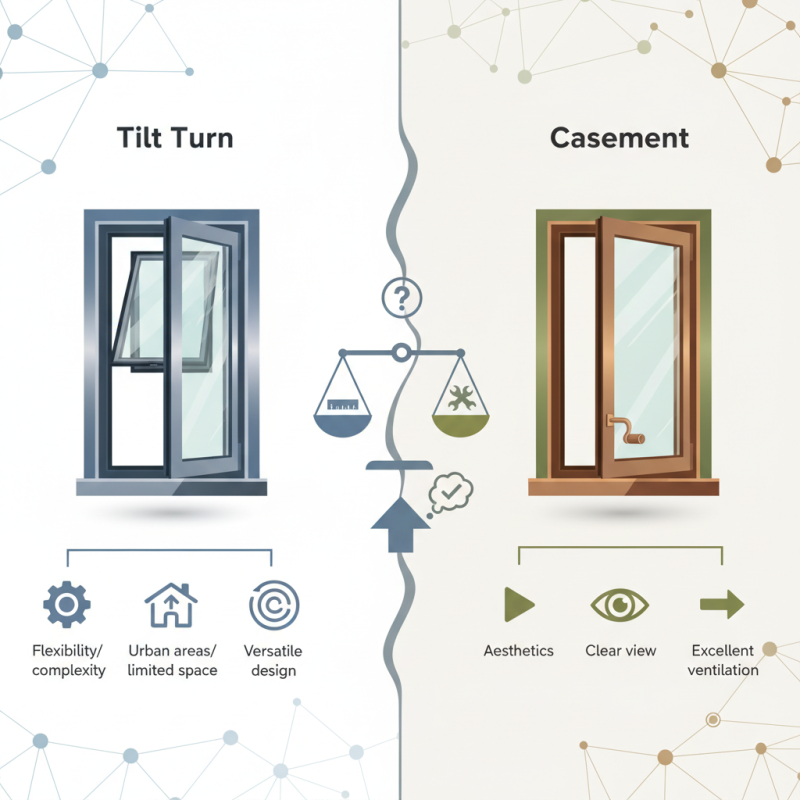
When deciding between tilt turn and casement windows, it's essential to understand their key features. Tilt turn windows are versatile. They can open in two ways: tilt for ventilation or fully turn in for easy cleaning. This dual function is particularly useful in tight spaces. Casement windows, on the other hand, hinge on one side. They offer a clear view and allow full airflow when opened.
Tip: Consider your space. Tilt turn windows work well in smaller rooms due to their space-efficient design. In contrast, casement windows require room to swing open. This can limit placement options in tight areas.
Both styles have their pros and cons. Tilt turn windows may be more complex to install, increasing costs. Meanwhile, casement windows mightn't suit every weather condition. They can catch the wind, making them difficult to close securely. Reflect on these factors when choosing.
Tip: Think about maintenance. Casement windows often gather dirt in their hinges, needing regular checks. Tilt turn windows require less maintenance but might have issues if not used correctly. Consider your lifestyle and maintenance preferences before making a choice.
| Feature | Tilt Turn Windows | Casement Windows |
|---|---|---|
| Opening Mechanism | Can tilt inward for ventilation or turn fully open | Opens outward from the side |
| Energy Efficiency | Highly energy efficient with tight seals | Good energy efficiency, but depends on installation |
| Space Requirements | Requires less space when tilting | Needs more clearance when opening |
| Security | Offers better security options | Generally secure, but may be easier to force open |
| Maintenance | Low maintenance, easy to clean | Requires regular maintenance to keep hinges functional |
| Cost | Typically higher initial cost | Usually more budget-friendly |
: Tilt turn windows can open in two ways: tilt for ventilation and fully turn for easy cleaning.
They work well in smaller rooms due to their space-efficient design.
Casement windows allow full airflow and provide a clear view when opened.
They require less maintenance but can have issues if not used correctly.
They provide a tight seal when closed, reducing air leakage and energy costs.
Yes, cleaning them can be tricky, especially on higher floors. A ladder may be needed.
Yes, they often have triple glazing options for better insulation.
Think about your space, lifestyle, and how much maintenance you're willing to do.
No, they might catch the wind, making it difficult to close securely.
Aesthetics matter, especially for tilt turn windows, which offer modern designs.
Choosing the right windows for your home can significantly impact both functionality and aesthetics. In the article "How to Choose Between Tilt Turn and Casement Windows at 2026 Canton Fair," the author explores the fundamental differences between tilt turn and casement windows. It highlights key features of tilt turn windows, such as their versatile opening mechanisms and space-saving advantages, while also discussing the benefits of casement windows, which offer superior ventilation and energy efficiency.
The comparative analysis delves into the energy efficiency of both window types, helping homeowners make informed decisions based on their specific needs. When navigating the extensive offerings at the Canton Fair, it’s crucial to consider various factors such as design preferences, climate conditions, and building regulations. Ultimately, understanding how to choose between tilt turn and casement windows will enable you to select the best option for your home.

 Spencer Window