Choosing windows near the ocean requires more than comparing glass sizes or frame colors. Salt spray, strong winds, driving rain, and intense sunlight can quickly expose weak materials. So, what is the best window style for coastal climates? The answer depends on your shoreline, storm exposure, home design, and installation quality.
Building scientist Joseph Lstiburek often emphasizes, “Water managed is water controlled.” That principle matters greatly beside the sea. A well-designed window should shed rain, resist corrosion, and support dependable drainage. Casement and awning windows can create tight seals when closed. Their compression locks may also reduce air leakage during storms. However, exposed hinges and hardware need regular inspection. Nothing is maintenance-free.
This guide examines seven practical tips for choosing coastal windows. We will consider impact-resistant glass, laminated glazing, fiberglass and vinyl frames, corrosion-resistant hardware, and proper flashing. We will also compare operable and fixed styles. Fixed windows offer fewer moving parts. Awning windows can allow ventilation during light rain. Large glass areas may improve views, but they can increase heat gain and wind pressure.
Local conditions change everything. A protected bay differs from an open Atlantic shoreline. Building codes matter, too. A product rated for one wind zone may fail elsewhere. Certified installation is essential. Even an excellent window can leak when flashing is poorly integrated. I have seen attractive coastal projects overlook this detail. That mistake is expensive.
The best choice is not always the most stylish one. It is the window system that balances protection, ventilation, durability, and careful installation. Expect trade-offs. That is the honest answer.
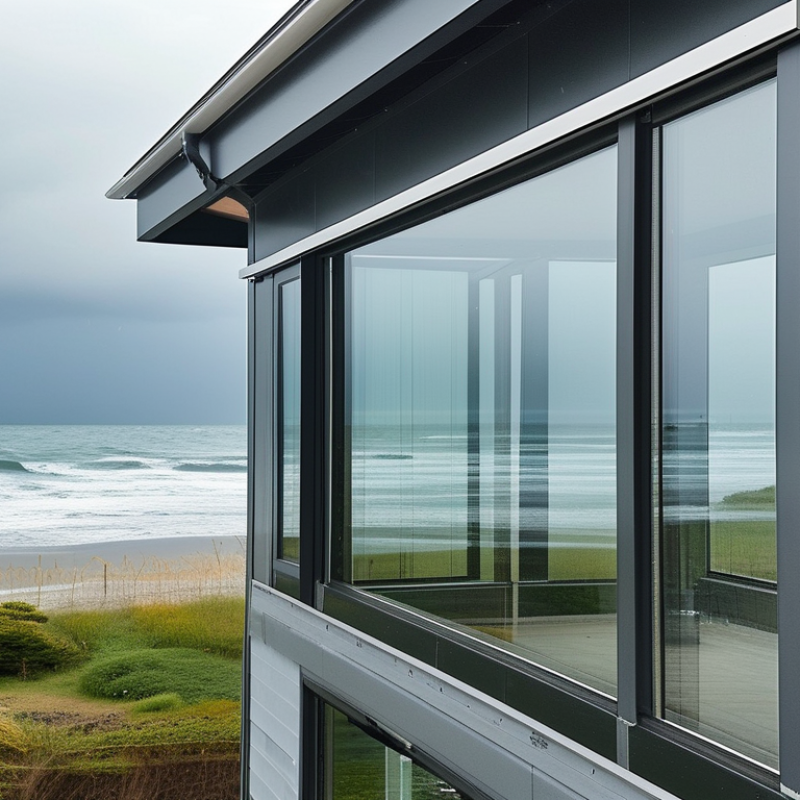
Coastal homes face salt spray, driving rain, strong winds, humidity, and rapid temperature changes. NOAA projects more frequent high-tide flooding as sea levels rise. That makes water resistance a design priority, not a cosmetic choice. Choose corrosion-resistant frames and hardware, preferably with sealed joints. Stainless or specially coated components usually perform better near saltwater. Check the warranty details carefully.
Casement and awning windows often create tighter seals than loose-fitting sliding styles. However, exposed hinges can corrode without regular maintenance. Consider impact-rated laminated glass where local wind-borne debris standards require it. FEMA notes that opening protection can reduce storm damage, but windows must still meet local building codes. Confirm the design pressure rating with a qualified professional. Do not guess.
Energy performance also matters. The U.S. Department of Energy reports that windows can account for roughly 25–30% of residential heating and cooling energy use. Look for low-emissivity glass, suitable solar heat-gain control, and verified NFRC ratings. Inspect sill drainage, flashing, and installation gaps; poor installation can defeat an excellent window.
Seven checks help: wind rating, impact rating, water resistance, air leakage, corrosion protection, glass performance, and installer experience.
Fixed windows may offer the strongest seal, but they provide less ventilation. That trade-off deserves honest reflection.
In coastal climates, wind, salt, and humidity test windows differently. A fixed window usually offers the strongest air and water seal because it has no moving sash. Awning and casement windows can also perform well, using compression seals and multiple locking points. They should still carry local pressure and impact ratings. FEMA’s Coastal Construction Manual recommends tested glazing or protective systems in windborne-debris regions. Local requirements depend on wind speed, exposure, and building height.
Double-hung windows are convenient, but their sliding tracks can collect salt, sand, and moisture. Small deposits may damage seals over time. Horizontal sliders have similar maintenance concerns, especially around weep holes. Awning windows shed rain effectively when opened slightly, although exposed hinges need regular rinsing. In humid rooms, ventilation matters. The U.S. Environmental Protection Agency recommends indoor relative humidity between 30% and 50%. A sealed window cannot solve poor mechanical ventilation.
Salt air changes the maintenance equation. Use corrosion-resistant hardware, durable corner joints, and drainage paths that remain accessible. The U.S. Department of Energy reports that windows can represent about 25% to 30% of residential heating and cooling energy use. Low-e glazing and tight installation therefore matter, not just window style. My preference is often a fixed-and-awning combination, but that is not universal. A beautiful casement can fail quickly with weak flashing or neglected hardware. Check product testing against ASTM E1886/E1996, water penetration, and the site’s required wind pressure before choosing.
Coastal windows face salt spray, driving rain, strong sunlight, and powerful wind. The frame and glass must work together. Fiberglass or composite frames offer strong resistance to moisture, warping, and repeated temperature changes. They also need careful installation. A durable frame can still fail when water enters an unsealed joint.
Aluminum frames can perform well when they include thermal breaks and corrosion-resistant finishes. Choose stainless steel hardware, preferably marine-grade, for exposed locations. Avoid untreated metal near the shoreline. For glass, laminated units improve safety because the inner layer holds broken pieces together. Low-emissivity coatings can reduce heat gain, while insulated panes help control indoor humidity. Tempered glass adds strength, but it does not replace laminated protection in high-wind areas.
Tip 1: Check the local wind-load requirements before choosing a window style.
Tip 2: Select frames with drainage channels and visible weep holes.
Tip 3: Use corrosion-resistant fasteners, not ordinary steel.
Tip 4: Ask for edge-seal details on insulated glass units.
Tip 5: Inspect corners for small gaps after installation.
Tip 6: Wash salt residue from frames and glass regularly.
Tip 7: Have seals reviewed after severe storms.
I once underestimated salt buildup around a coastal frame. It looked clean from indoors. The outer track told another story. Maintenance matters more than many homeowners expect.
For coastal climates, the best window style is usually a fixed or casement unit with impact-rated laminated glass. These designs create fewer weak points than large sliding panels. Choose seven features carefully: laminated glass, a tested frame-and-glass assembly, a suitable design-pressure rating, corrosion-resistant hardware, low U-factor, low solar heat-gain coefficient, and certified installation. Look for performance labels verified by the National Fenestration Rating Council.
Storm protection begins with the complete assembly, not the glass alone. FEMA guidance emphasizes tested openings, secure anchorage, and properly designed shutters or impact systems in hurricane-prone areas. A high design-pressure rating should match the building site, elevation, and wind exposure. Local code officials or a qualified engineer should confirm the requirement. Guessing here can become expensive.
Energy performance matters after the storm passes. The U.S. Department of Energy reports that windows may represent 25–30% of residential heating and cooling energy use. Low-E glazing, insulated frames, tight weatherstripping, and a lower solar heat-gain coefficient can reduce unwanted heat. South- and west-facing windows need extra attention. I once treated every coastal elevation the same. That was a mistake. Salt air, driving rain, and intense afternoon sun create different stresses. Also inspect drainage paths and fasteners yearly. Small corrosion spots can spread quickly. No window solves every exposure.
Choosing coastal windows begins with comparison, not appearance. Check wind-load ratings, impact resistance, water performance, and thermal values. Local building codes should guide these measurements.
Frame materials matter near salt air. Reinforced vinyl, fiberglass, and treated aluminum can perform well when properly specified. Look for stainless or corrosion-resistant hardware. Compare glazing options by U-factor, solar heat gain, and visible light. A lower U-factor helps in cooler coastal regions. Shading may matter more in hot, sunny areas. Ask for test reports, not only sales claims.
Installation decides whether those ratings survive real weather. Use a qualified installer familiar with coastal construction and required permits. The sill should include a sloped drainage path, durable flashing, and correctly placed fasteners. Leave the manufacturer’s expansion gaps. Small errors can trap water behind the frame. That is easy to miss.
Maintenance is practical and repetitive. Rinse exterior surfaces with fresh water every few weeks during salty seasons. Clean weep holes with a soft brush. Inspect gaskets, sealants, locks, and corner joints twice yearly. Replace cracked sealant before storms arrive. Never force stiff hardware; find the cause first. No window is maintenance-free. I have seen owners focus on glass strength while ignoring blocked drainage. That mistake can create interior staining, even when the window itself remains intact. Examine one opening after heavy rain, because real water paths often reveal more than a brochure.
| Window style | Typical coastal strengths | Air and water performance | Typical whole-window U-factor* | Maintenance demand | Best coastal application | Decision tip |
|---|---|---|---|---|---|---|
| Casement | Compression seals can create a tight closure; unobstructed glass provides broad views. | Usually favorable when the sash, locks, seals, and frame are properly rated and adjusted. | About 0.25–0.35 Btu/h·ft²·°F for common double-glazed low-emissivity units; verify the product label. | Low to moderate; inspect hinges, locks, gaskets, and exposed fasteners. | Windward or exposed elevations where air sealing is a priority. | A strong general choice, but confirm the tested design pressure for the opening. |
| Awning | Top-hinged sash can help shed light rain while partially open and supports controlled ventilation. | Generally good when closed; drainage paths must remain clear and the sash must be fully latched. | About 0.25–0.35 Btu/h·ft²·°F with comparable glazing and frame materials. | Moderate; clean the upper frame and check operators for salt deposits. | Bathrooms, kitchens, and sheltered openings needing ventilation during light rain. | Do not treat the open position as storm protection; close and secure it before severe weather. |
| Single-hung | Simple operation, limited moving hardware, and a lower opening area can reduce maintenance complexity. | Performance depends heavily on interlocks, weatherstripping, sill drainage, and latch adjustment. | About 0.28–0.38 Btu/h·ft²·°F for common insulated double-glazed configurations. | Low to moderate; clean tracks and inspect the balance system and meeting rails. | Protected façades and projects prioritizing straightforward operation. | Choose reinforced locks and verified impact or windborne-debris protection where required by code. |
| Horizontal slider | Easy to operate and space-efficient because the sash does not project outward. | Sliding tracks and meeting rails can be more vulnerable to wind-driven rain and air leakage if poorly adjusted. | About 0.30–0.40 Btu/h·ft²·°F for common insulated double-glazed units. | Moderate to high; remove sand and salt from tracks and keep weep holes open. | Sheltered sides of a home, wide openings, and locations requiring easy access. | Use only after comparing tested air-leakage and water-resistance data with hinged alternatives. |
| Fixed or picture | Fewest moving parts and typically the lowest air leakage when the frame and perimeter seal are correctly installed. | No operating sash; performance depends on glazing, frame joints, perimeter flashing, and wall integration. | About 0.20–0.32 Btu/h·ft²·°F, depending on glazing, spacer, frame, and size. | Low; inspect perimeter sealants and clean the exterior glass safely. | Large view areas, high wind exposures, and locations where ventilation is not needed. | Pair with operable windows elsewhere so the room still receives adequate ventilation and egress. |
| Tilt-and-turn | Multiple operating positions, compression seals, and convenient interior cleaning. | Can provide strong closed-position sealing when hardware is correctly adjusted and the frame is square. | About 0.22–0.34 Btu/h·ft²·°F with suitable insulated glazing. | Moderate; lubricate multipoint hardware and inspect seals more frequently in salt-air locations. | Homes needing secure ventilation and interior-side cleaning of upper floors. | Confirm that the selected hardware, restrictors, and emergency-egress dimensions meet local requirements. |
| Tip | What to check | Recommended benchmark or practice | Why it matters near the coast |
|---|---|---|---|
| 1 | Compare certified performance labels. | Review whole-window U-factor, solar heat gain coefficient, visible transmittance, air leakage, and tested water-resistance information. Lower U-factor generally means better insulating performance. | A similar-looking window can perform very differently because of glazing, frame design, and size. |
| 2 | Verify wind and debris requirements. | Use the project-specific design pressure and local building-code requirements. Where required, select tested impact-resistant assemblies or an approved protective system. | Wind pressure varies with height, exposure, building geometry, and distance from the shoreline. |
| 3 | Choose corrosion-resistant materials. | Specify compatible corrosion-resistant fasteners, hardware, flashing, sealants, and finishes. Confirm material compatibility rather than mixing dissimilar metals without isolation. | Salt spray and humidity can accelerate corrosion at hinges, locks, screws, and drainage components. |
| 4 | Install a continuous water-management system. | Integrate sill pans, end dams, flashing, back dams, compatible sealants, and head flashing with the wall drainage plane according to the approved installation method. | A high-performing window can still leak if the rough-opening flashing is incomplete or incorrectly layered. |
| 5 | Protect drainage and weep paths. | Keep sill weep holes, tracks, sloped sills, and exterior drainage channels free of dust, sand, paint, and sealant. | Blocked drainage can retain salt water and increase the risk of staining, corrosion, and concealed moisture damage. |
| 6 | Rinse and inspect regularly. | Rinse exterior frames, hardware, and glass with clean water every 1–3 months in exposed salt-air locations; use mild soap when needed and avoid abrasive cleaners. | Regular freshwater rinsing helps remove salt deposits before they concentrate during evaporation. |
| 7 | Test operation and seals before storm season. | Check that each sash closes squarely, locks fully, compresses its gaskets, and does not bind. Replace cracked seals and lubricate compatible hardware as directed. | A closed and latched window is essential for the assembly to achieve its tested air, water, and structural performance. |
*U-factor ranges are indicative values for common insulated double-glazed configurations, not guarantees for a specific product. Always use the certified whole-window rating and project-specific code requirements. Coastal exposure, local wind zone, building height, glazing area, and installation method can change the appropriate specification.
: Fixed windows often provide the strongest seal against wind and rain. Casement and awning windows can also seal tightly. No style wins everywhere.
They can work, but tracks collect salt, sand, and moisture. Blocked tracks and weep holes may damage seals. Frequent cleaning becomes essential.
Use impact-rated laminated glass where local wind-debris rules require it. Check the required pressure and impact ratings before ordering. Do not guess.
Reinforced vinyl, fiberglass, and treated aluminum can perform well. Choose stainless or corrosion-resistant hardware with sealed joints. Coatings alone may not solve weak drainage.
Installation can determine whether strong window ratings work in practice. Use durable flashing, sloped sill drainage, and correctly placed fasteners. Small gaps can trap water.
Consider low-emissivity glass, suitable solar control, and verified thermal ratings. A lower U-factor may help in cooler coastal areas. Shading can matter more in hot, sunny locations.
Rinse exterior surfaces with fresh water every few weeks during salty seasons. Clean weep holes with a soft brush. Inspect gaskets, locks, sealants, and joints twice yearly.
No. Indoor relative humidity should generally remain between 30% and 50%. Mechanical ventilation may still be necessary, especially in bathrooms and kitchens.
Check the sill, corners, flashing, and interior wall below the window. Look for staining, dampness, or blocked drainage paths. Real water paths may reveal problems brochures miss.
No window is maintenance-free, even with strong glass and corrosion-resistant parts. Neglected hinges or cracked sealant can shorten service life. That trade-off deserves honest reflection.
What is the best window style for coastal climates? The answer depends on local wind exposure, humidity, salt spray, and storm risk. Casement, awning, and fixed windows can provide strong sealing and reduced air leakage when properly designed, while sliding and double-hung styles may offer convenient ventilation but require careful attention to tracks and locks. The ideal choice should balance airflow, weather resistance, visibility, and ease of maintenance.
For long-term durability, choose corrosion-resistant frames, high-quality weather seals, impact-resistant or laminated glass, and secure multi-point locking systems. Proper installation is equally important because even a durable window can fail if gaps allow moisture or wind to enter. Compare products by structural strength, glass performance, drainage design, energy efficiency, and warranty terms. Regularly rinse away salt, inspect seals and hardware, clear drainage paths, and repair small issues early to help coastal windows remain safe, efficient, and attractive.

Spencer Window